
Study Notes · ICT Core Content
Study Notes: ICT Core Content – Equilibrium Vs. Discount
 by Anthony TranUpdated on Aug 12, 2025
- Min read
- 5
- Sections
- 11
Disclaimer: Educational content based on personal experience, not financial advice. Futures trading involves substantial risk. Read full disclaimer
In this article
- 01Understanding When Markets Are “On Sale”
- 02What Is Equilibrium in Trading?
- 03What Is a Discount Market?
- 04The Simple 4-Step Process
- 05Why This Works
- 06Real Example: How to Spot These Patterns
- 07Key Benefits of This Approach
- 08Important Safety Rules
- 09What About Losing Trades?
- 10Getting Started
- 11The Bottom Line
These are my study notes from ICT Mentorship Core Content – Month 1 – Equilibrium Vs. Discount. I’m documenting them for personal review and to share my trading journey.
Original ICT video: https://www.youtube.com/watch?v=qC0LogyIk2I
Understanding When Markets Are “On Sale”
Have you ever waited for your favorite store to have a sale before buying something? Trading works in a similar way. Smart traders wait for markets to go “on sale” before they buy. Today, I’ll teach you how to spot these sales using a simple concept called equilibrium versus discount.
What Is Equilibrium in Trading?
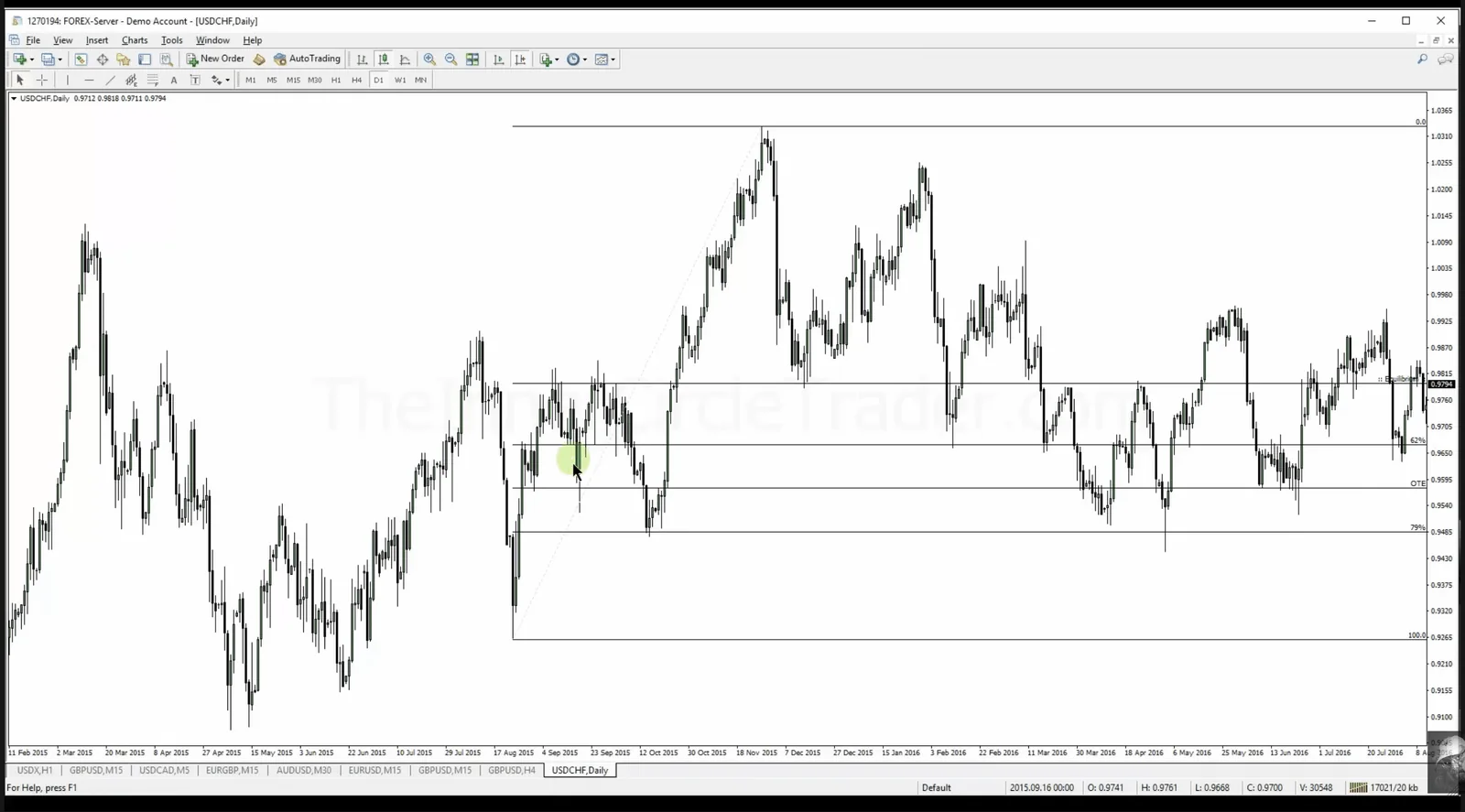
Think of equilibrium like the fair price of something. It’s not too expensive, but it’s not cheap either. In trading, equilibrium is the middle point between a high price and a low price.
Here’s how it works:
- When a stock or currency moves from a low point to a high point, the middle of that move is equilibrium
- This middle point is exactly 50% between the low and the high
- At equilibrium, the price is “fair” – not overpriced, not underpriced
What Is a Discount Market?
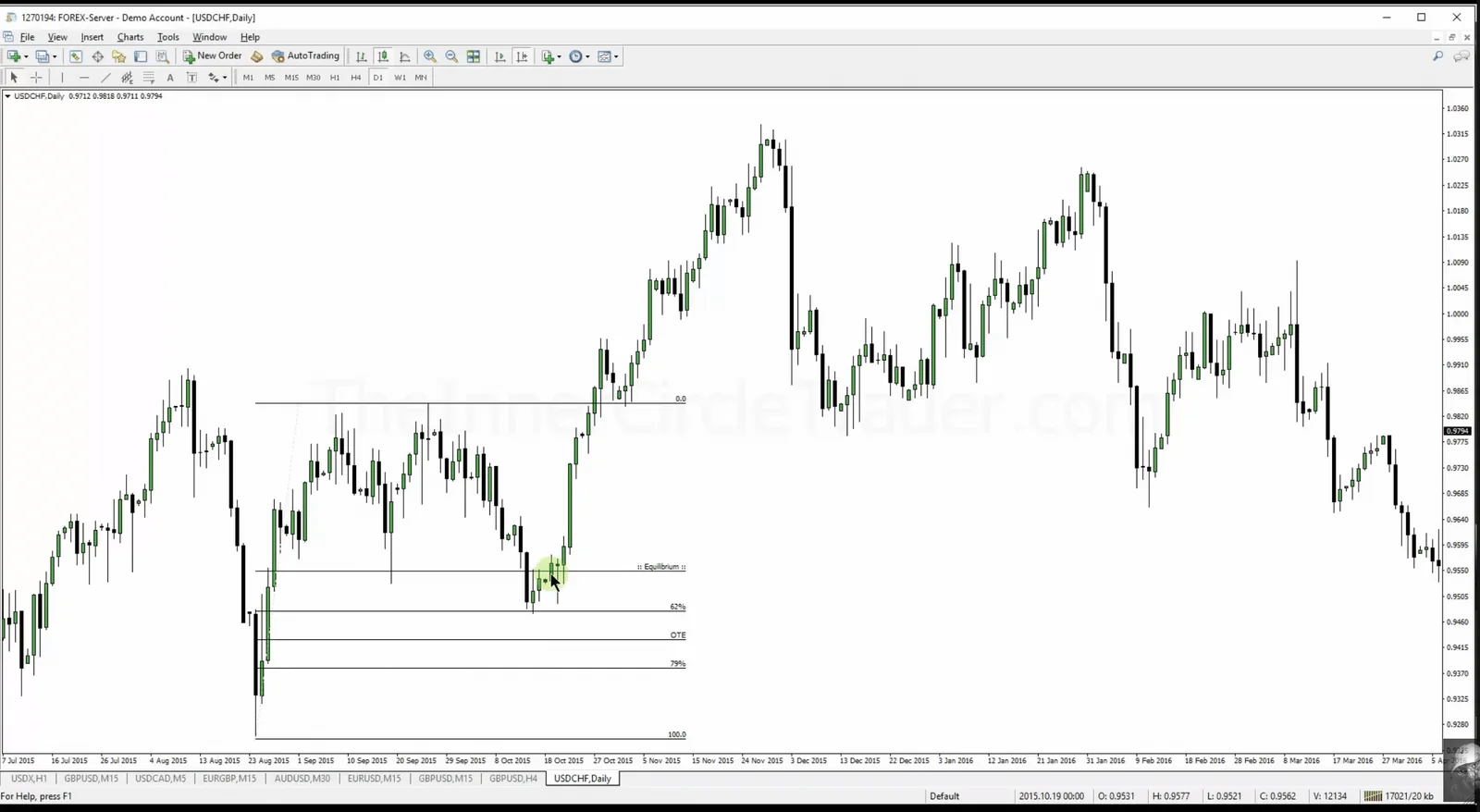
A discount market is when prices drop below equilibrium. Just like a store sale, this means you can buy at a better price.
Key rule: Anything below the 50% mark (equilibrium) is considered a discount.
The best discounts happen when prices fall to:
- 62% below the high point
- 70.5% below the high point
- 79% below the high point
These levels give you the biggest “sale prices” and the best chances for profit.
The Simple 4-Step Process
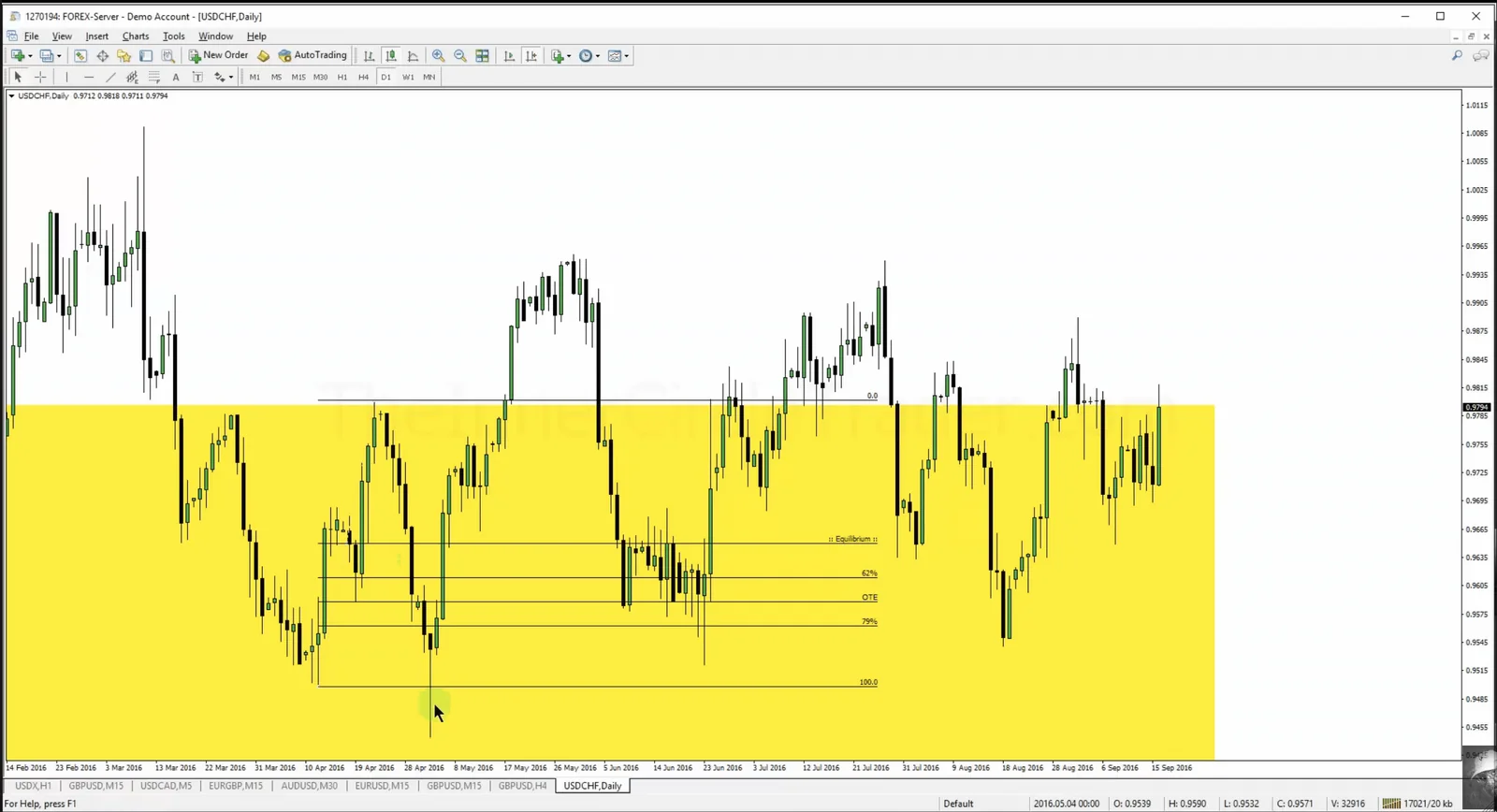
Here’s the exact method professional traders use:
Step 1: Find a Strong Move Up
Look for prices that move up quickly and strongly. This shows that big money (banks and institutions) are buying.
Step 2: Wait for the Turn
After prices go up, wait for them to start coming back down. You need to see at least 4 candles (price bars) where the highest one is in the middle, with lower ones on both sides.
Step 3: Watch for Equilibrium
Wait patiently as prices fall back to the 50% level (equilibrium). Don’t rush – good trades take time to develop.
Step 4: Look for the Discount
The best buying opportunities happen when prices drop below equilibrium into the 62-79% range. This is when markets are truly “on sale.”
Why This Works
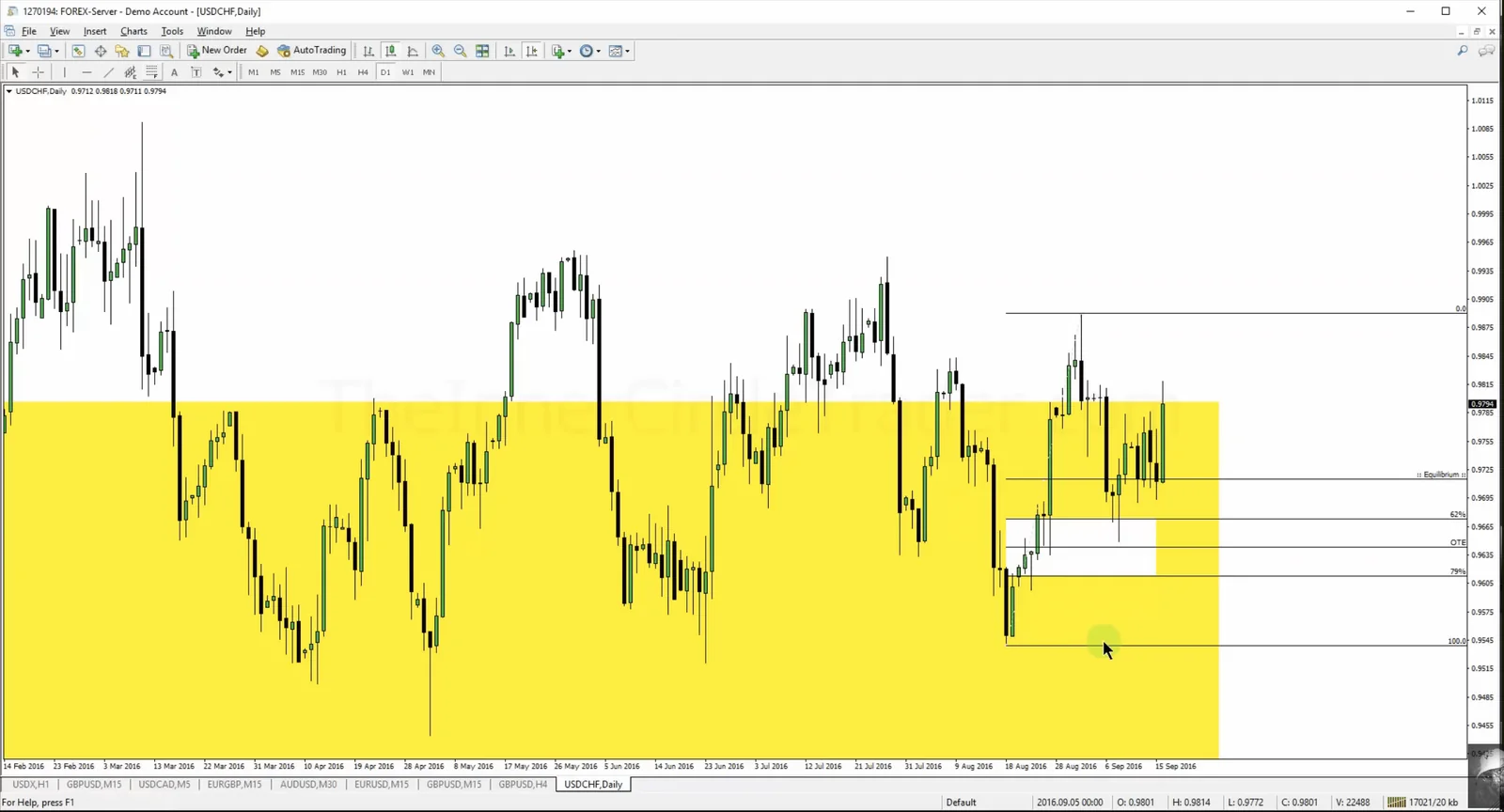
Smart money (banks and big investors) think just like you do when shopping. They don’t want to pay full price. They wait for discounts.
When markets reach discount levels:
- Prices don’t stay low for very long
- Big money jumps in to buy
- Prices shoot back up quickly and strongly
Real Example: How to Spot These Patterns
Let’s say a currency pair moves from $0.95 to $0.98. Here’s what happens:
- The high: $0.98
- The low: $0.95
- Equilibrium (50%): $0.965 (the middle point)
- Discount zone: Below $0.965
- Best buying zone: $0.958 to $0.954 (62-79% area)
When prices reach that $0.958-$0.954 zone, smart traders get ready to buy because they know prices are “on sale.”
Key Benefits of This Approach
- Less stress: You’re not chasing prices or making rushed decisions
- Better timing: You buy when others are selling (at discounts)
- Higher profits: Buying at discounts means more room for prices to go up
- Clear rules: You know exactly when to look for opportunities
Important Safety Rules
- Never buy above equilibrium – that’s paying full price or more
- Be patient – good discounts take time to develop
- Wait for confirmation – make sure the market is actually turning up
- Use stop losses – protect yourself if you’re wrong
What About Losing Trades?
Even this method isn’t perfect. Sometimes prices keep falling below your discount zone. When this happens:
- Look for prices to go below old low points
- This often means stop-loss orders are being triggered
- The market usually bounces back up quickly after clearing these stops
- This gives you an even better buying opportunity
Getting Started
To practice this method:
- Use a demo account – never risk real money while learning
- Start with daily charts – these move slower and give you time to think
- Focus on major currency pairs – they tend to follow these patterns well
- Keep notes – track what works and what doesn’t
The Bottom Line
Trading successfully isn’t about complicated indicators or secret formulas. It’s about understanding when markets are offering good value.
By waiting for prices to fall into discount territory (below equilibrium), you’re doing what smart shoppers do – buying when things are on sale, not when they’re overpriced.
Remember: Patience pays. Wait for the market to come to you with a good deal, rather than chasing after it when prices are high.
The best traders are like smart shoppers – they wait for sales, buy at discounts, and sell when prices go back up. Master this simple concept, and you’ll have a huge advantage over traders who buy and sell without any plan.
Start practicing this on your charts today. Look for strong moves up, find the equilibrium point, and watch how prices behave when they reach discount levels. You’ll be amazed at how often this pattern repeats across all markets and timeframes.
Disclaimer: Trading involves substantial risk and is not suitable for all investors. Past performance does not guarantee future results. This content is for educational purposes only and should not be considered financial advice. Always consult with a qualified financial advisor before making trading decisions.
Keep reading