
Study Notes · ICT Core Content
Study Notes: ICT Core Content – Elements Of A Trade Setup
 by Anthony TranUpdated on Aug 12, 2025
- Min read
- 5
- Sections
- 08
Disclaimer: Educational content based on personal experience, not financial advice. Futures trading involves substantial risk. Read full disclaimer
In this article
These are my study notes from ICT Mentorship Core Content – Month 1 – Elements Of A Trade Setup. I’m documenting them for personal review and to share my trading journey.
Original ICT video: https://www.youtube.com/watch?v=0LhteuLVuDU
What is ICT Trading?
ICT stands for “Inner Circle Trader.” It’s a way of looking at the market that helps you understand how big banks and institutions move prices. Think of it like learning the “secret language” that professional traders use.
The best part? You don’t need fancy indicators or complex charts. You just need to understand 4 simple market conditions.
Why This Matters
Most new traders lose money because they don’t understand what the market is actually doing. They buy when they should sell, or sell when they should buy. ICT trading helps you see what the “smart money” (big banks) are doing so you can follow along.
The 4 Market Conditions (Keep It Simple!)
The market can only do 4 things. That’s it! Once you understand these 4 conditions, trading becomes much clearer.
1. Consolidation (Going Sideways)
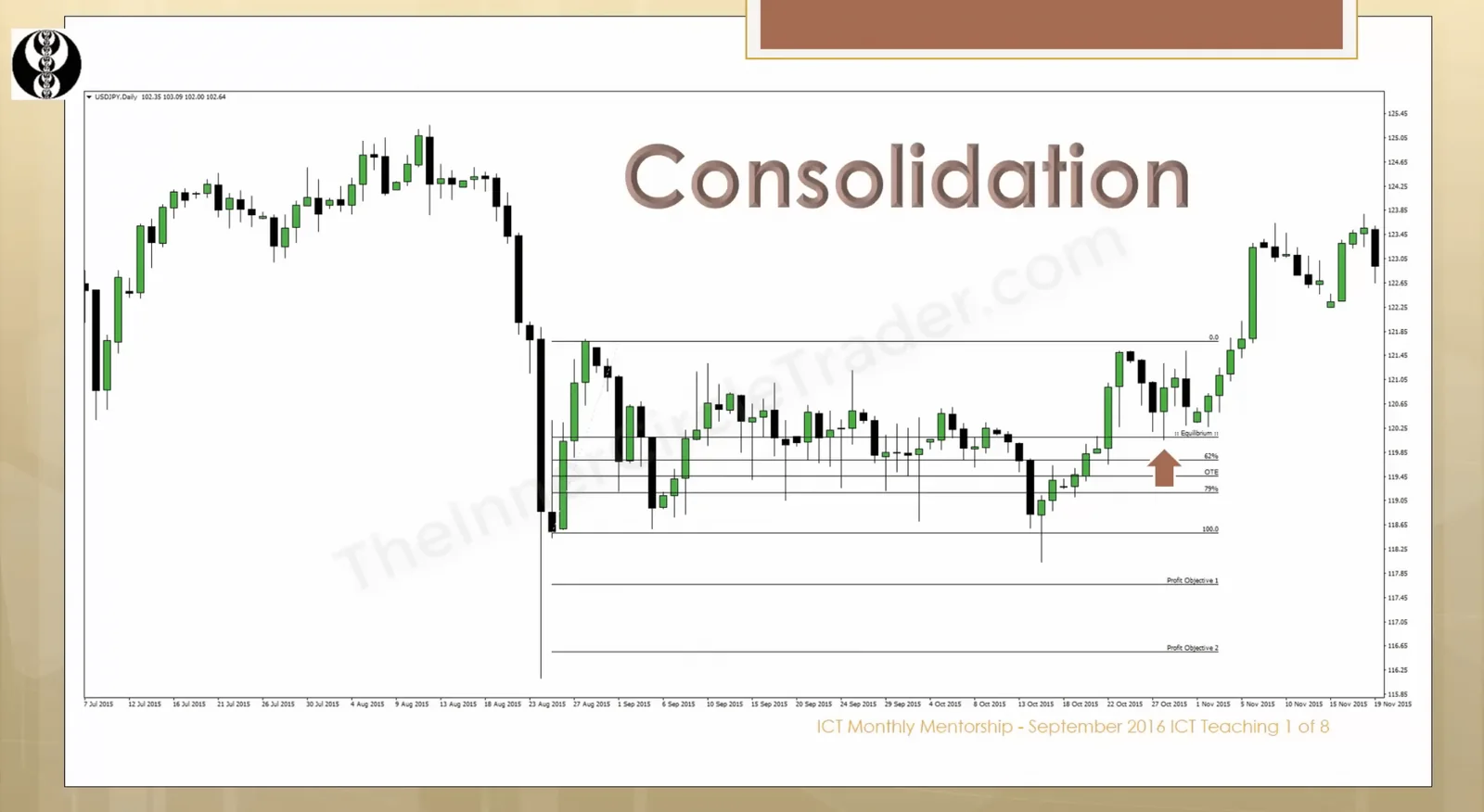
What it looks like: Price moves back and forth in a range. It’s not going up or down much – just bouncing between two levels.
What’s really happening: The big banks are collecting orders. They’re waiting for enough people to buy and sell before they make their next big move.
What you should do: Wait! Don’t trade yet. Just watch and get ready for the next condition.
Think of it like: A rubber band being stretched. The more it stretches, the bigger the snap will be.
2. Expansion (Breaking Out)
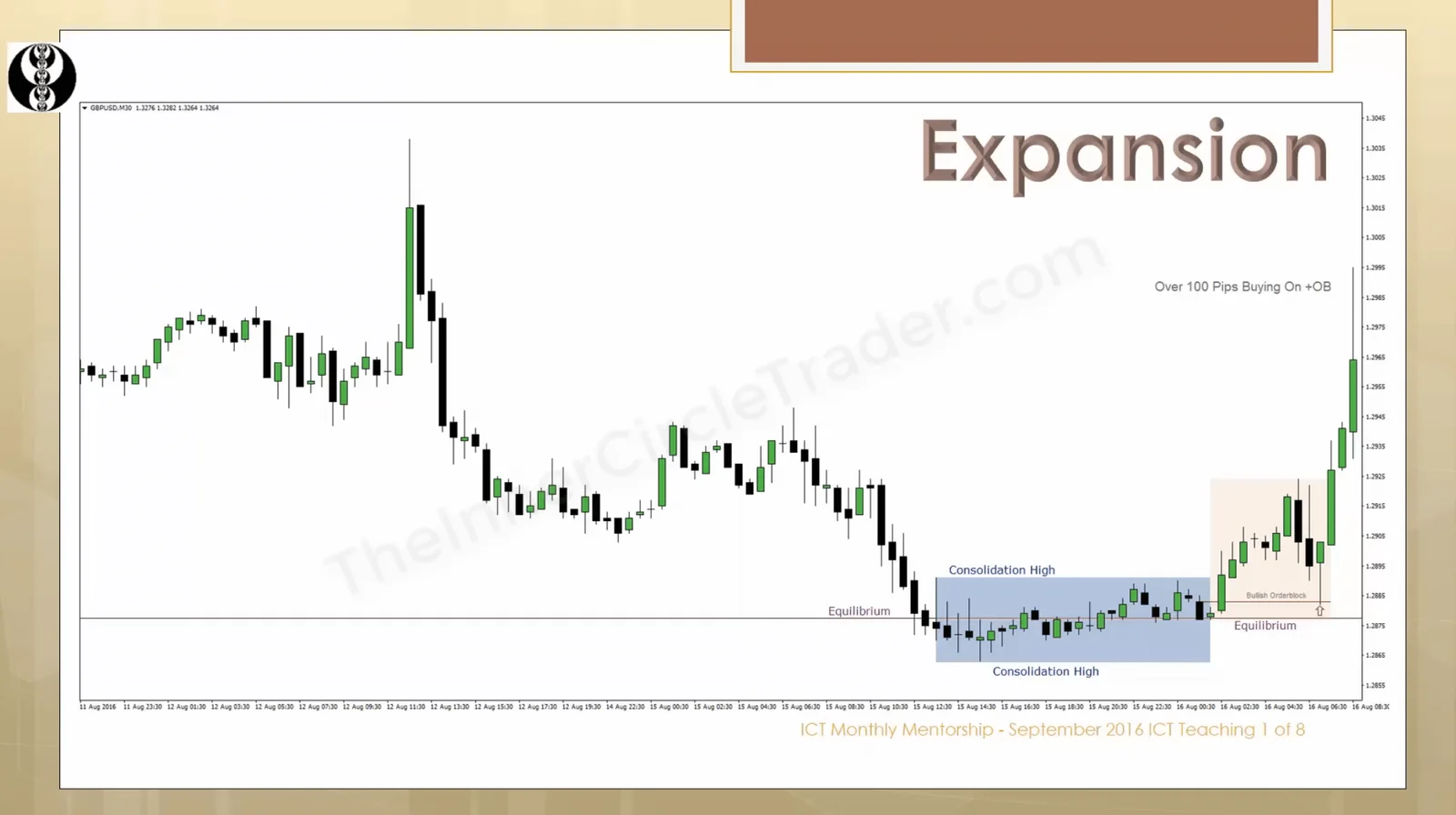
What it looks like: Price suddenly moves fast in one direction, leaving the consolidation range.
What’s really happening: The banks have decided which way to push price. They’re showing their hand.
What you should do: Don’t chase the move! Wait for price to come back to where it started (the “order block”).
Think of it like: A rocket taking off. You don’t jump on a moving rocket – you wait for it to come back to the launch pad.
3. Retracement (Coming Back)
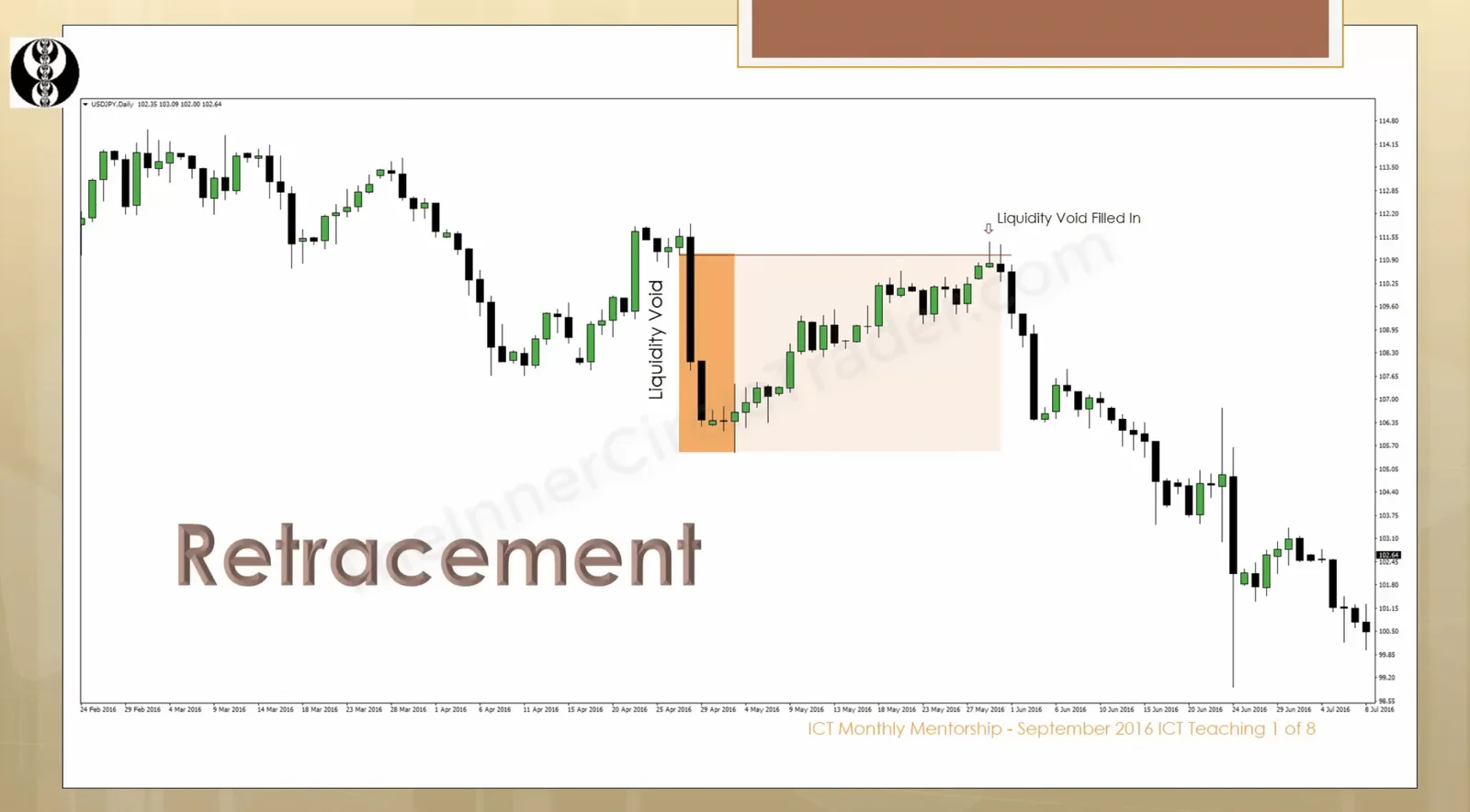
What it looks like: After the big move, price comes back partway. It’s like the market is taking a breath.
What’s really happening: The banks are giving you a second chance to get in at a better price.
What you should do: This is often your best trading opportunity. Look for “liquidity voids” – areas where price moved too fast and left gaps.
Think of it like: A ball bouncing. After it hits the ground hard, it bounces back up partway.
4. Reversal (Changing Direction)
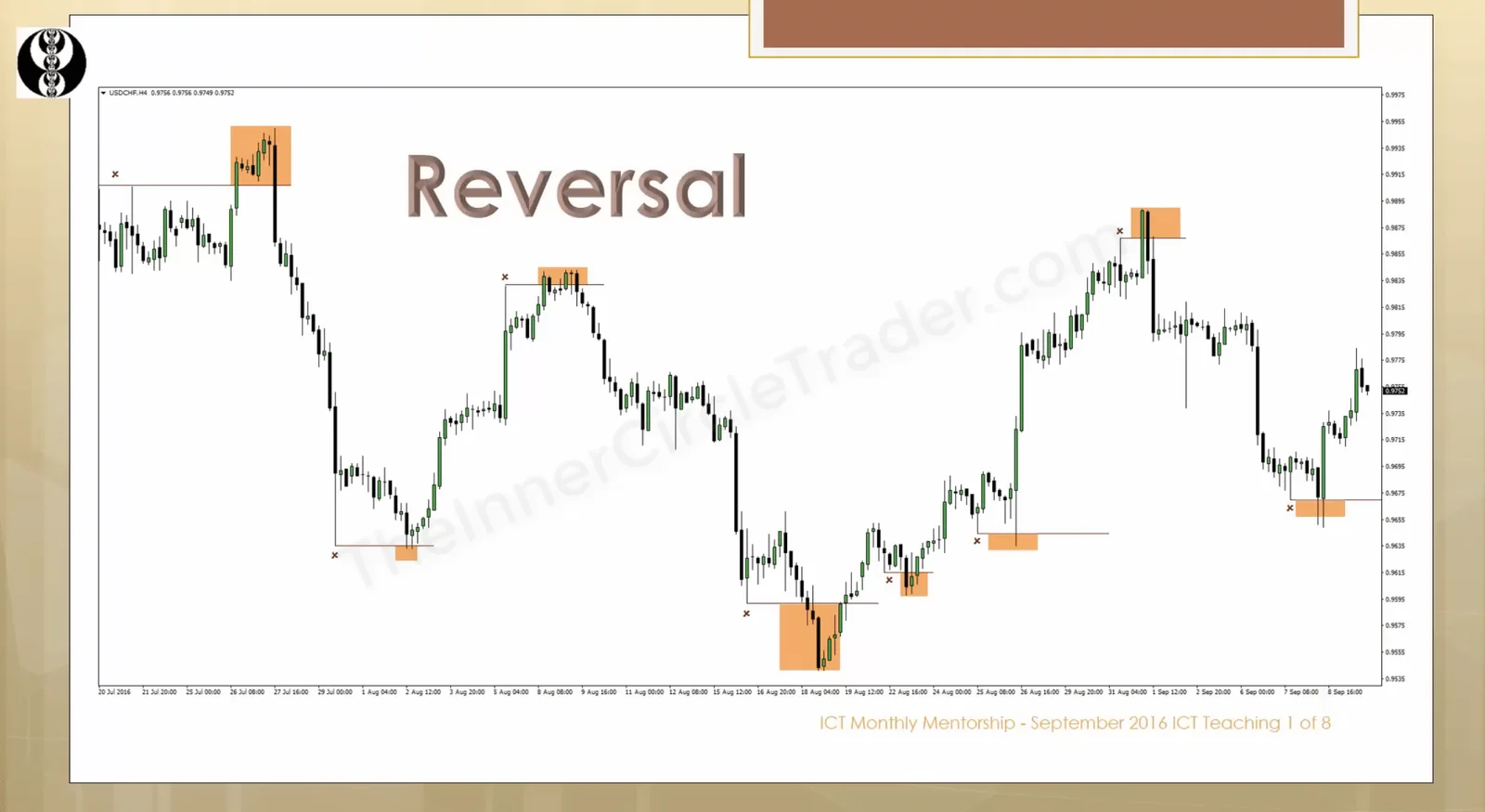
What it looks like: Price was going one way, but now it’s going the opposite direction.
What’s really happening: The banks have taken out all the stop losses above or below key levels, and now they’re reversing.
What you should do: Look for old highs and lows. Price often goes just beyond these levels to grab stops, then reverses.
Think of it like: A pendulum swinging. It goes as far as it can in one direction, then swings back the other way.
The ICT Tools (Your Trading Weapons)
For each market condition, you use a specific tool:
Order Blocks
- When to use: During expansion
- What it is: The last candle before a big move
- How to trade: Wait for price to come back to this level, then trade in the direction of the original move
Liquidity Voids
- When to use: During retracements
- What it is: Areas where price moved too fast and left gaps
- How to trade: Price often comes back to fill these gaps
Liquidity Pools
- When to use: During reversals
- What it is: Stop losses sitting above old highs or below old lows
- How to trade: Wait for price to grab these stops, then trade the reversal
Equilibrium
- When to use: During consolidation
- What it is: The middle of the consolidation range
- How to trade: Wait for price to break out from this level
How to Start (Your Action Plan)
- Pick one condition to focus on first. Don’t try to learn all 4 at once.
- Study old charts. Look at what already happened and practice identifying these conditions.
- Start with major currency pairs like EUR/USD or GBP/USD.
- Be patient. You won’t get a trade every day, but you might get several good ones each week.
- Don’t chase moves. Wait for price to come to you.
The Most Important Rule
Only trade when you can clearly identify one of these 4 conditions. If you can’t tell what the market is doing, don’t trade. It’s that simple.
Common Beginner Mistakes to Avoid
- Trying to trade every move – You don’t need to catch every opportunity
- Using too many indicators – The price chart tells you everything you need
- Trading during consolidation – Wait for the breakout instead
- Chasing price – Let it come back to you
- Not being patient – Good setups take time to develop
Your Next Steps
- Open your charts and look for consolidation areas
- Find where price broke out (expansion)
- See if price came back (retracement)
- Notice any reversals at old highs or lows
- Practice identifying these patterns for at least 2 weeks before risking real money
Remember: Trading is not about being right all the time. It’s about being right when it matters and keeping your losses small when you’re wrong.
The banks and institutions use these same concepts to make millions. Now you know their playbook too.
Start with one condition, master it, then move to the next. Simple, patient, and profitable – that’s the ICT way.
Disclaimer: Trading involves substantial risk and is not suitable for all investors. Past performance does not guarantee future results. This content is for educational purposes only and should not be considered financial advice. Always consult with a qualified financial advisor before making trading decisions.
Keep reading