
Study Notes · Market Maker Primer
Study Notes: Market Maker Primer – Money Management That Works
 by Anthony TranUpdated on Aug 1, 2025
- Min read
- 5
- Sections
- 11
Disclaimer: Educational content based on personal experience, not financial advice. Futures trading involves substantial risk. Read full disclaimer
In this article
- 01Why This Matters More Than You Think
- 02The Real Problem: Losing Streaks Will Happen
- 03The ICT Solution: Plan for Losses Before They Happen
- 04A Simple Example
- 05Why Most Traders Hate This System
- 06The Magic: Flat Equity Curves
- 07Common Mistakes to Avoid
- 08Risk Management Rules
- 09Practice This in Demo First
- 10The Bottom Line
- 11Your Next Steps
These are my study notes from ICT Market Maker Primer – Money Management That Works. I’m documenting them for personal review and to share my trading journey.
Original ICT video: https://www.youtube.com/watch?v=RtMRykCZtC4
Why This Matters More Than You Think
Most new traders think the secret to making money is finding the perfect trading system. They spend months looking for strategies that win 80% or 90% of the time. But here’s the truth: your win rate doesn’t matter as much as how you manage your money.
You can lose money with a 90% win rate if you don’t manage risk properly. You can also make money with just a 40% win rate if you use smart money management.
The Real Problem: Losing Streaks Will Happen
Every trader faces losing trades. Even the best traders in the world lose money sometimes. The problem isn’t the single loss – it’s what happens in your head after that loss.
Here’s what usually happens:
- You take a loss and feel frustrated
- You want to “get your money back” quickly
- You risk more money on the next trade
- If that loses too, you risk even more
- This continues until your account is wiped out
This is called “revenge trading” and it destroys accounts faster than anything else.
The ICT Solution: Plan for Losses Before They Happen
Instead of hoping you won’t lose, plan for it. Here’s the simple system:
Step 1: Start Small and Build Up
- Begin with your smallest position size (like $0.50 per pip)
- After each winning trade, you can increase your size slightly
- Never jump straight to your maximum risk
Step 2: The “5-Win Rule”
This is the key part:
- Count your winning trades in a row
- After 5 winning trades, immediately drop back to your smallest position size
- Why? Because a losing streak is probably coming next
Step 3: Cut Size After Every Loss
- Whenever you take a loss, go back to your smallest position size
- Stay small until you get back above your starting account balance
- Then you can slowly build up again
A Simple Example
Let’s say you start with a $5,000 account:
Week 1:
- Trade 1: Win with $0.50/pip = +$30
- Trade 2: Win with $1.00/pip = +$60
- Trade 3: Win with $1.50/pip = +$90
- Trade 4: Win with $2.00/pip = +$120
- Trade 5: Win with $2.50/pip = +$150
Now you’ve had 5 wins in a row. Time to drop back to $0.50/pip!
Week 2:
- Trade 6: Loss with $0.50/pip = -$10 (instead of losing $50+ if you kept big size)
- Trade 7: Loss with $0.50/pip = -$10
- Trade 8: Win with $0.50/pip = +$30
See how the losses barely hurt? That’s the power of this system.
Why Most Traders Hate This System
This system feels boring when you’re winning. Your brain will tell you:
- “I’m on a hot streak, keep going big!”
- “Why am I trading so small when I’m winning?”
- “I could make more money faster if I kept my size up”
Ignore these thoughts. They lead to blown accounts.
The goal isn’t to get rich quick. The goal is to stay in the game long enough to become consistently profitable.
The Magic: Flat Equity Curves
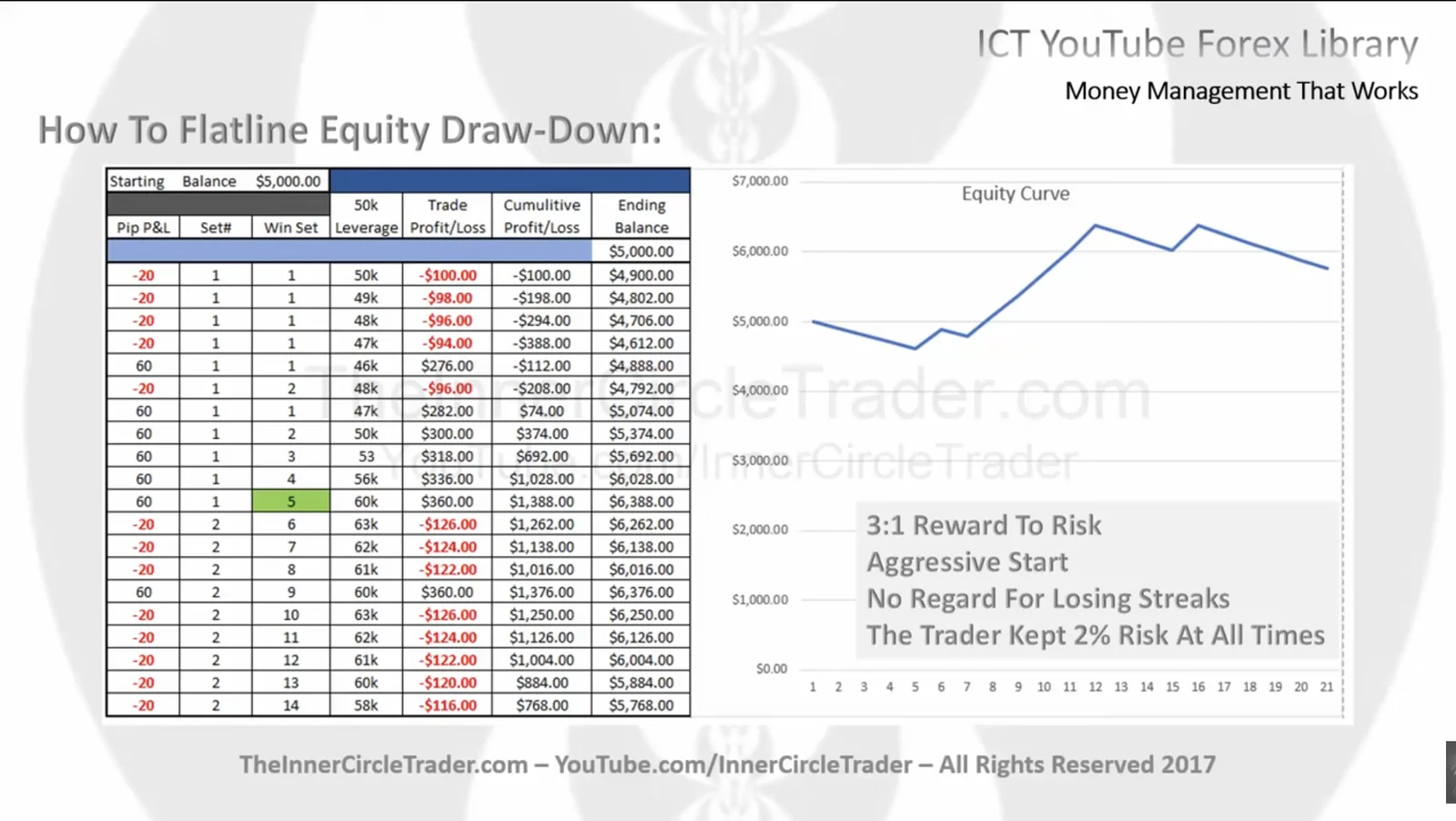
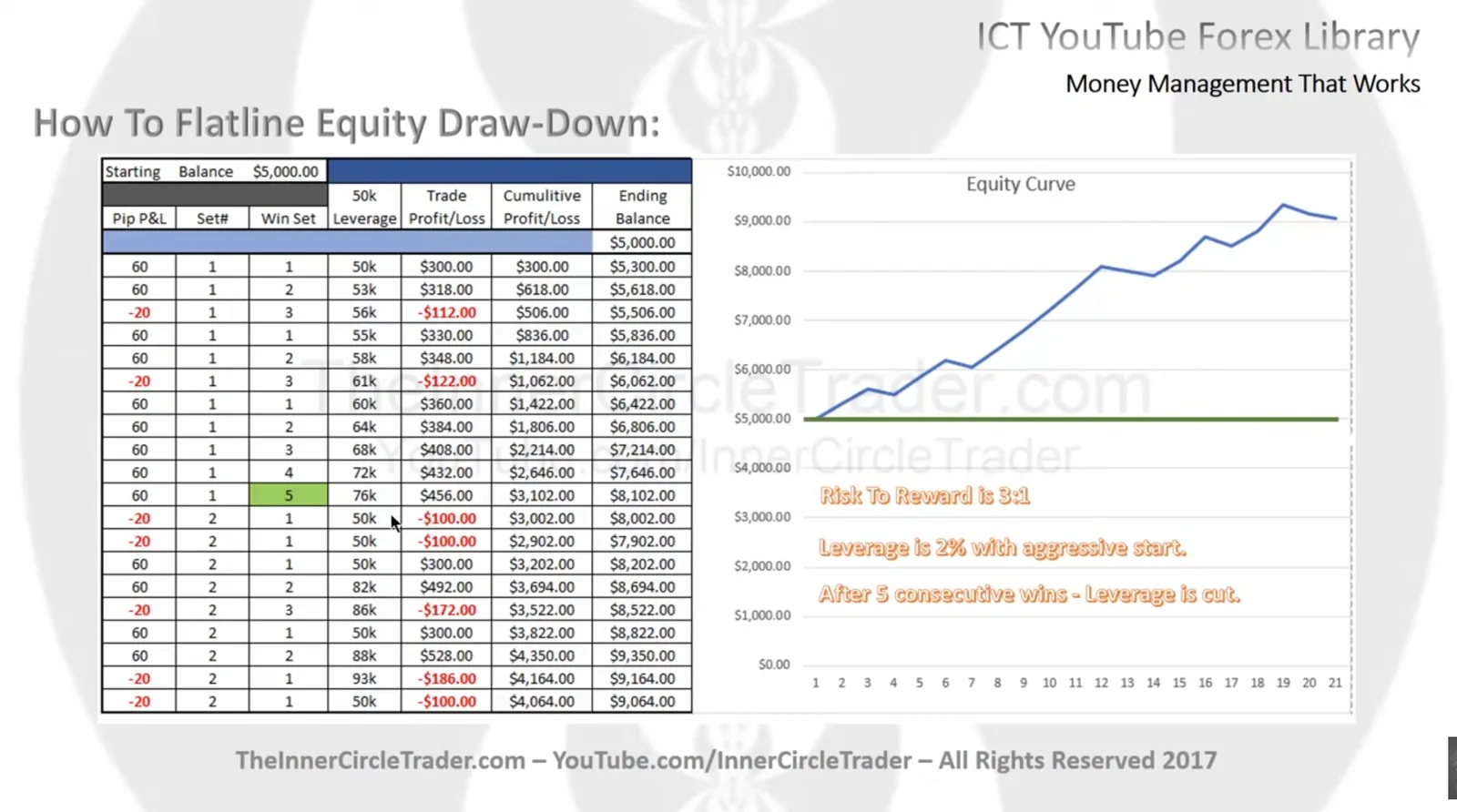
When you use this system, your account balance doesn’t go up and down like a roller coaster. Instead, it slowly climbs up like stairs:
- Up a little during win streaks
- Flat during losing streaks (instead of crashing down)
- Up again during the next win streak
This keeps you calm and disciplined. You won’t panic during losses because they barely affect your account.
Common Mistakes to Avoid
Mistake 1: Focusing on Win Rate
Don’t worry about being right 80% of the time. Focus on managing your risk properly.
Mistake 2: Not Having a Plan for Losses
Most traders hope they won’t lose. Smart traders plan for losses and prepare for them.
Mistake 3: Watching Your Account Balance Too Much
Your daily P&L will drive you crazy. Focus on following your rules, not your account balance.
Mistake 4: Revenge Trading
Never increase your risk after a loss. Always decrease it.
Risk Management Rules
How Much to Risk Per Trade
- New traders: 1% or less per trade
- More experienced: 1-2% maximum
- Never risk more than you can afford to lose
Risk-to-Reward Ratios
- Try to make 2-3 times what you risk
- If you risk $20, aim to make $40-60
- This means you can be wrong more often and still make money
Practice This in Demo First
Before you use real money:
- Open a demo account with $5,000
- Practice this money management system for at least 2-3 months
- Track your results and see how it feels
- Only consider real money after you’ve mastered the discipline
The Bottom Line
Making money in trading isn’t about finding the perfect strategy. It’s about:
- Managing your risk properly
- Staying disciplined during losses
- Planning for bad streaks before they happen
- Keeping your emotions under control
This money management system helps you do all of these things. It might seem boring at first, but boring often equals profitable in trading.
Remember: The goal is to survive long enough to become good at this. Flashy gets you noticed, but steady gets you paid.
Your Next Steps
- Practice this system on a demo account
- Track your wins and losses carefully
- Follow the 5-win rule religiously
- Stay small after every loss
- Be patient with the process
The traders who get rich quick usually give it all back just as fast. The traders who build wealth slowly and steadily are the ones still trading years later.
Start small, stay disciplined, and let the system work for you.
Disclaimer: Trading involves substantial risk and is not suitable for all investors. Past performance does not guarantee future results. This content is for educational purposes only and should not be considered financial advice. Always consult with a qualified financial advisor before making trading decisions.
Keep reading