
Study Notes · Market Maker Primer
Study Notes: Market Maker Primer – Understanding The ICT Judas Swing
 by Anthony TranUpdated on Jul 31, 2025
- Min read
- 5
- Sections
- 08
Disclaimer: Educational content based on personal experience, not financial advice. Futures trading involves substantial risk. Read full disclaimer
In this article
These are my study notes from ICT Market Maker Primer – Understanding The ICT Judas Swing. I’m documenting them for personal review and to share my trading journey.
Original ICT video: https://www.youtube.com/watch?v=xJMbva8SjzE
If you’re new to trading, you’ve probably heard traders talk about fancy setups and complicated strategies. Today, I want to teach you about one of the most reliable patterns in the market: the ICT Judas Swing.
Don’t worry if you’ve never heard of it before. By the end of this article, you’ll understand exactly what it is and how to spot it on your charts.
What Is the ICT Judas Swing?
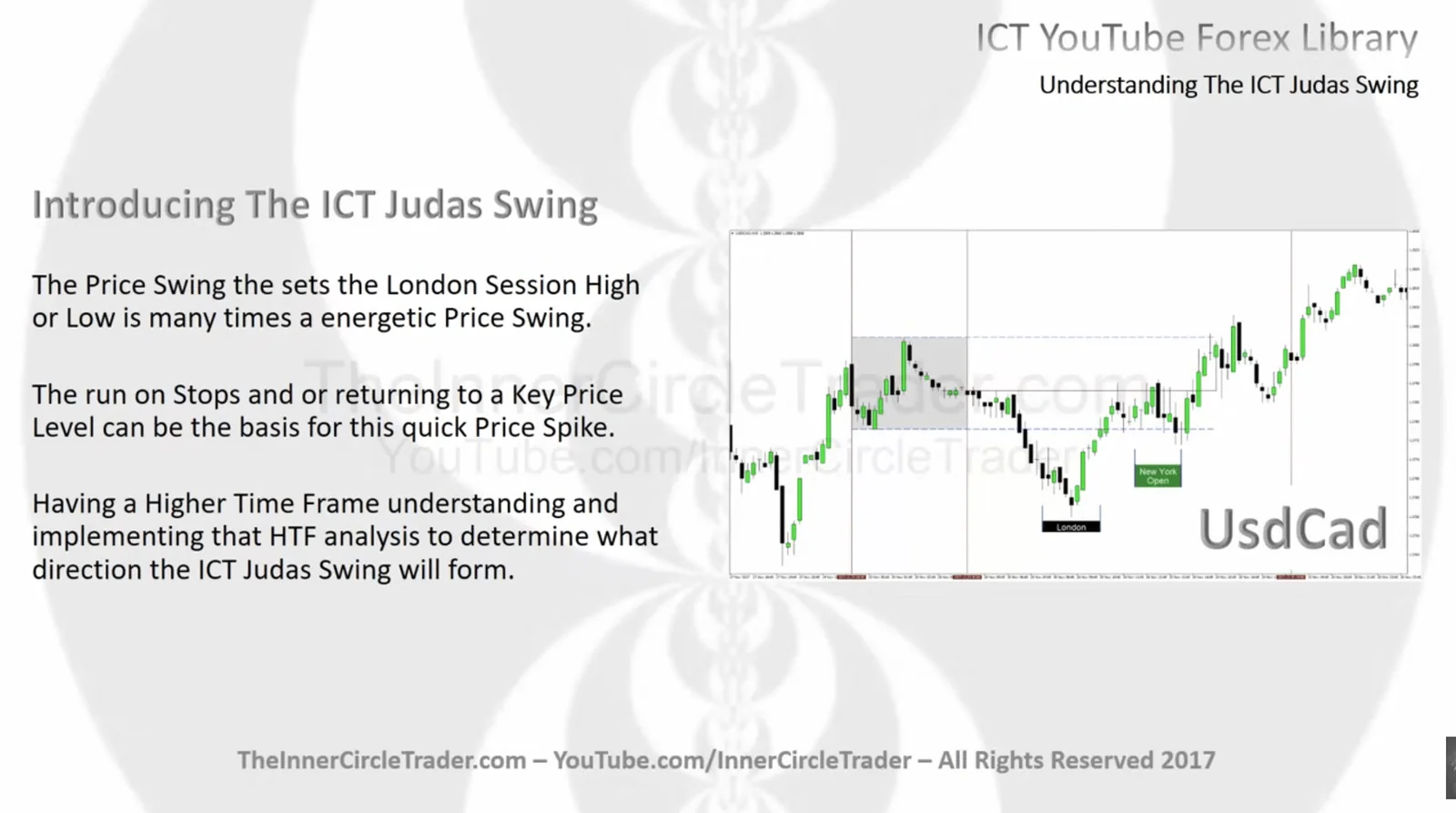
Think of the Judas Swing like a trap. Just like in the old story where Judas led people astray, this market pattern tricks traders into making the wrong move.
Here’s what happens: The market moves in one direction to get traders excited. They jump in, thinking they’re making a smart trade. But then – surprise! – the market quickly reverses and goes the opposite way, leaving those traders stuck in losing positions.
The name comes from an old farming trick. Farmers used a “Judas goat” to lead sheep into a slaughterhouse. The goat would lead the sheep down the path, but at the last second, it would turn away while the sheep kept going. The Judas Swing works the same way in trading.
When Does It Happen?
The Judas Swing occurs during specific hours:
- Start time: Midnight New York time
- End time: 5:00 AM New York time
This 5-hour window is when London traders wake up and start trading. It’s one of the most active times in the forex market.
You don’t need to stay up all night watching charts. You can study these patterns later or set alerts on your trading platform.
The Two Types of Judas Swings
1. Bullish Judas Swing (Market Goes Up)
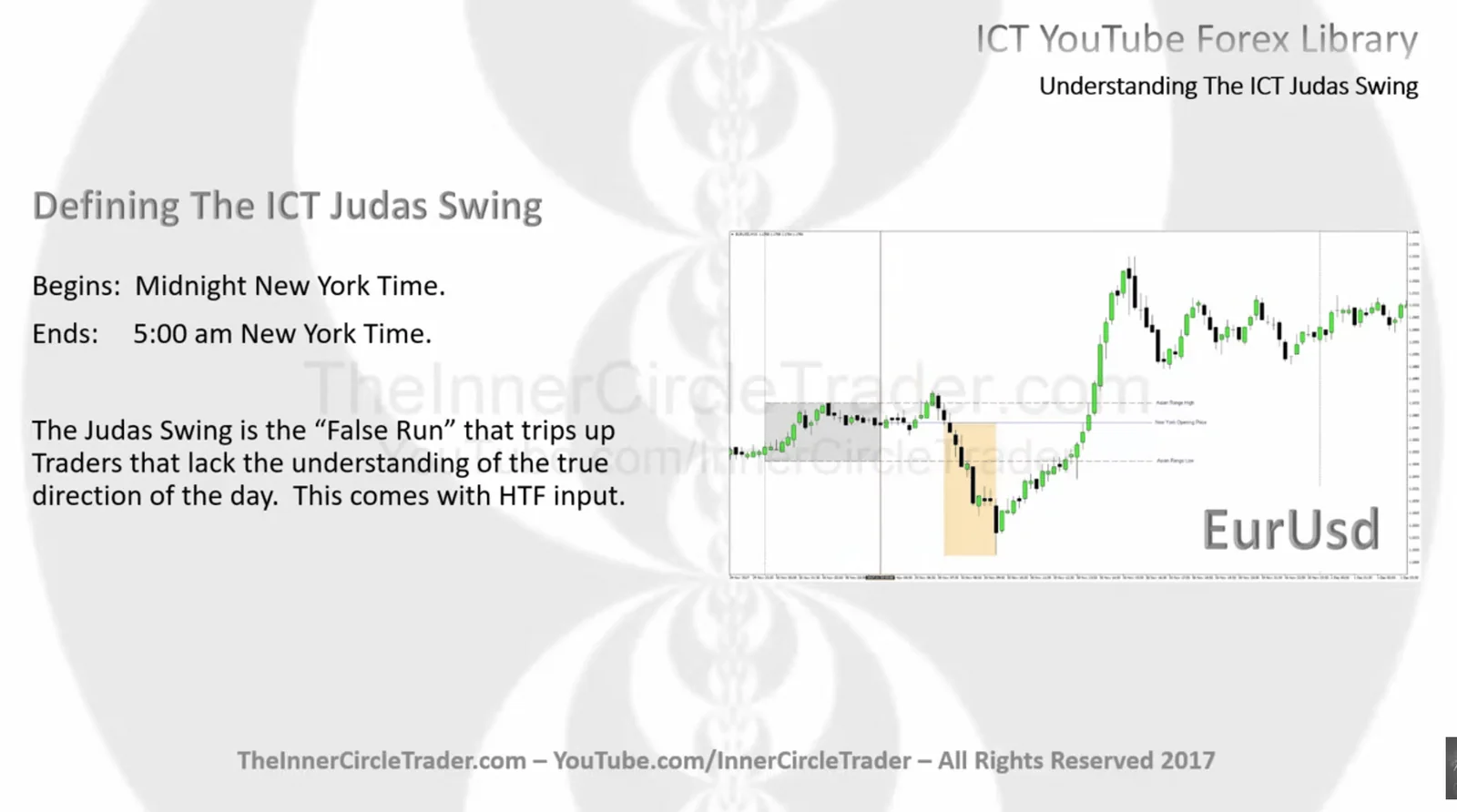
Here’s how it works when the market is set to rise:
Step 1: Look at the Asian trading session (the hours before London opens). You want to see prices moving in a tight, small range.
Step 2: Price breaks above this range first. This gets traders excited – they think prices are going higher, so they buy.
Step 3: Here comes the trap! Price suddenly drops below the midnight opening price and even lower than the Asian range. Traders who bought earlier start to panic.
Step 4: After this fake drop, price shoots back up and keeps climbing for the rest of the day.
The key is that drop below the opening price – that’s your Judas Swing signal.
2. Bearish Judas Swing (Market Goes Down)
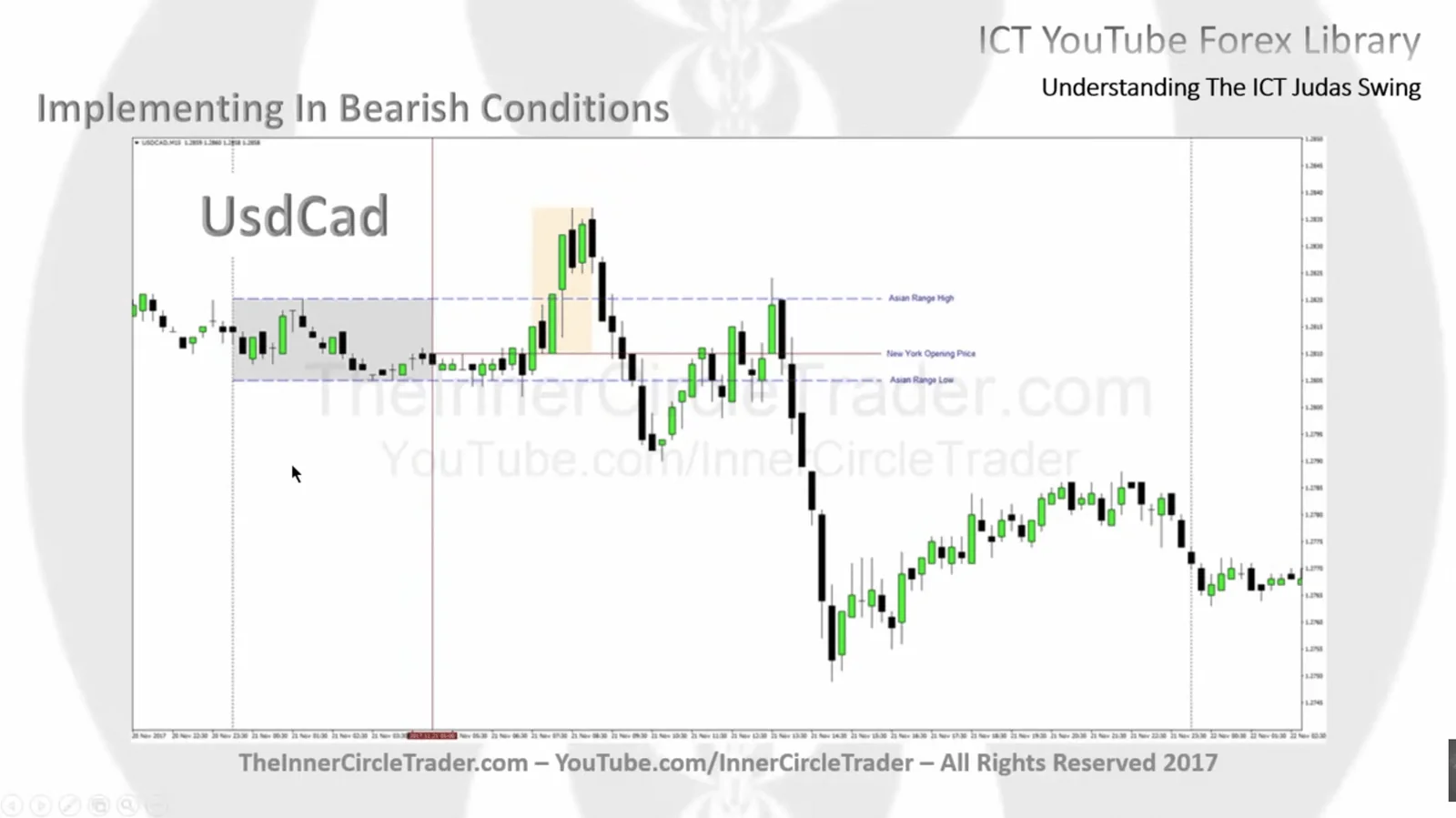
This works in the opposite direction when the market is set to fall:
Step 1: Again, start with a tight Asian range.
Step 2: Price drops below the Asian range first. Traders think it’s going lower, so they sell.
Step 3: The trap! Price suddenly jumps above the midnight opening price and above the Asian range high. Sellers start to worry.
Step 4: After this fake rally, price crashes down and keeps falling.
How to Spot a Real Judas Swing
Not every small move is a Judas Swing. Here are the must-have ingredients:
- Tight Asian range: Prices need to be moving in a small box during Asian hours
- First fake move: Price breaks one way to trick traders
- Cross the opening price: It must move past the midnight New York opening price
- Break the opposite side: It needs to break through the other side of the Asian range
- Strong follow-through: After the trap, price should move aggressively in the real direction
Why This Pattern Works
The Judas Swing works because of human psychology. Here’s what happens:
- Big banks and smart money know which way they want to push the market
- They create a fake move first to get regular traders positioned the wrong way
- Once enough traders are trapped, they push price in the real direction
- Trapped traders have to close their losing positions, which adds fuel to the real move
Tips for Beginners
Start Small: Practice spotting these patterns on your charts before you trade real money. Look back at old charts and see if you can find examples.
Don’t Force It: This pattern doesn’t happen every day. Wait for clear setups that match all the rules.
Use Higher Time Frames: Before looking for a Judas Swing, check the daily and weekly charts. Are they pointing up or down? This tells you which type of Judas Swing to look for.
Paper Trade First: Practice with fake money until you’re comfortable spotting and trading these patterns.
Common Mistakes to Avoid
- Trading every small move: Just because price dips below the opening doesn’t mean it’s a Judas Swing
- Ignoring the big picture: Always check higher time frames first
- Getting impatient: Wait for all the pieces to line up
- Trading without stops: Always have a plan for when you’re wrong
The Bottom Line
The ICT Judas Swing is like learning to recognize a magic trick. Once you know how it works, you can spot it happening in real-time. It’s one of the most reliable patterns in forex trading because it’s based on market psychology that never changes.
Remember: markets love to fool traders. The Judas Swing is just the market’s way of shaking out weak hands before making its real move. By understanding this pattern, you can avoid getting trapped and potentially profit from other traders’ mistakes.
Start by studying old charts. Print them out. Mark the patterns. Build up your experience seeing these setups. With time and practice, you’ll develop an eye for spotting when the market is setting up its next trap.
The key is patience and practice. Master this one pattern, and you’ll have a powerful tool in your trading toolkit.
Disclaimer: Trading involves substantial risk and is not suitable for all investors. Past performance does not guarantee future results. This content is for educational purposes only and should not be considered financial advice. Always consult with a qualified financial advisor before making trading decisions.
Keep reading